‘Listen, there is a telephone ringing in an empty house, demolished years ago…’
that was the last thing he wrote. I found it much later and much later I was intrigued. What do I mean? I used to visit his home, a council bungalow in the middle of a half-moon crescent, behind a busy road you could more than vaguely hear from his bedroom. Most days he sat in an armchair that groaned when he moved while wrapped in a variety of brightly coloured blankets especially in winter. The last time I visited he looked ill. His face parchment like. He pointed to a shelf with books falling into each other and said, ‘When I’ve gone, they are yours to keep’. I mumbled, ‘thanks.’ I never saw myself as an avid reader and anyway I was going out, wanted to catch a bus and meet up with friends. They were more important than this bungalow with the distinct smell of the old.
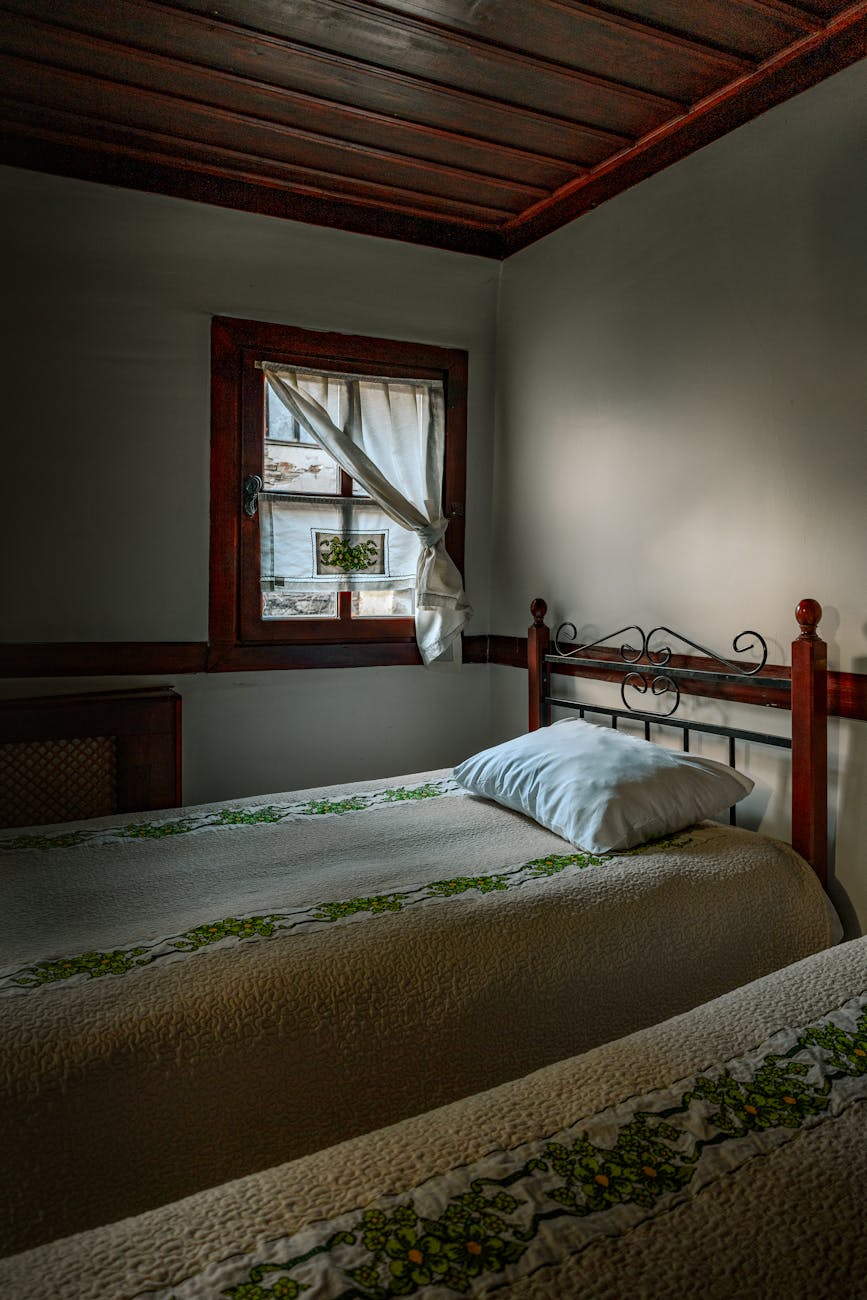
I was given the books by a very distant relative of the old man that came for the very first time to see him and empty his bungalow. The Council had given him two weeks to clear the house and this was the last day, he informed me, with a grunt or two. He then shoved a bag into my hands which for some reason had ‘Blackpool’ running along its side. The house looked odd. The old man’s chair was lying on its side in the bedroom and a carpet was jammed under the bed. The curtains were drawn, even during the day. ‘This is for you’, the miserable relative said, handing me a cardboard box literally over flowing with paper. I nodded and said, ‘thanks’ as I felt that is what he wanted me to say. Then he said I had to go although I had no intention of staying with him but I did a mini-tour of the old mans home. I wanted my last memory to be of the old man who had died and left his only family member an unpleasant man who did not want to be there. ‘Misérables’s’ final words were, ‘I hardly knew him. He had no family and left next door to nothing’. And then he shoved me out of the house, slammed the door behind him and left without a word or backward glance. Yes, he was a lot of fun.
The box with the old man’s papers survived three house moves. I never seemed to have the time to devote to the box and discover what he had written in his spidery writing, yes it was all hand written. He did not have any way of typing his work. What broke my never reading his writing was an accident. I felt as if I was under ‘house arrest’. No driving madly to work. I began a daily routine; his life took over me.
Since the old man’s death, I read voraciously: on trains, hotel rooms, anywhere. I became lost in words. Do not ask me what happened? Was it the memory of the old man almost continuously reading that I needed to emulate?
I began to type up his notes. Sometimes they looked like found poems. Yes, they were literally ‘found’. His spelling was not great but I became fixated by his notes. He sometimes wrote around the side of the paper and left in the middle blank. This one said, ‘I wish I had a photo of this’. Will the words suffice?
Going to Mass
Me Granny nodded her just-permed grey head to me,
the subject of the nod a poor woman,
in a military tunic, tired looking slippers,
slopping below spindly legs.
‘Her man has her like that,’
Granny just about whispered, showing disgust
at the man’s treatment of this woman
we prayed so hard for.
The next page (he had numbered each one) had a poem written around an image of the Sacred Heart and were in red biro. I am really trying to be true to his work. To capture his intentions.
Burning in Hell
Easter Mass was worse than Christmas;
‘The Stations of the Cross’ lasted weeks.
Only my carrying the cross and banging it against the wall,
with a clang which must have reached Bethlehem at the very least,
waking up the altar boys and leaving a missing piece of masonry
for years under the choirs’ stall. The priest recited each ‘Station’
with such fervour I thought I would die, my soul forever burning in Hell.
He was a Catholic and I had been there when a priest came to see him in order to give him Communion. He closed his eyes tightly when he took the host. His tongue was grey and his false teeth clicked. The poems, I will call them that now as I slowly discover they are a sequence. There is deep regret of a life not lived and now reliant on me, someone that had been with him via obligation, family connections or shared interests. And of the same religion I should add. I was a member of his church and a group that visited the old and infirm through guilt, obligation or who had perhaps been advised by the priest to ‘do something for the church’. Can I be seen as a reliable chronicler? Am I trying to make recompense for not listening to all he said. I began to think I could amend his work. After all, who would know? I am being selective after all these are a mere fraction of his work and are akin (in quantity) to Walt Whitman’s ‘Leaves of Grass,’ I bought as a teenager
Forget
Now I am alone and I sometimes live in the past,
go there in my sleep,
walking down paths, leaves gathering
against concrete borders
hiding some secret
curling away from me,
hiding a feeling I am implying.
I see myself young, trusting,
trapped in broken days
never seeming to forget.
Always too afraid to hold onto anyone.
Anyone.
To love with all my heart.
He talks of death in a few poems and is accompanied by a photo (presumably of his parents). He opens by talking of death in the broadest sense until the final verse.
And everyone was older in that past
yes, this applies to anyone you mention,
so much greyer and they just didn’t last.
They all walked so very, very carefully,
believe me when I tell you they stumbled,
in a deathly slow motion yes, so slowly.
And not forget all their strange expressions,
no-one else ever heard or understood:
I hope that we will learn our lesson.
Let’s not embargo their obituaries,
or forget the past, we are short-term survivors,
now my parents are lost in the breeze.
All I have
Mother and father, I want to say
just a few words, the ones left unsaid.
It was all so sudden, yet expected.
I am the one left behind,
carrying a large bag of harsh memories.
You should know I shouted, lost the plot.
The main thing, if there is such a thing,
is I loved both of you with all of my swollen heart and
miss and love you every long-barbed day.
Sorry if there are too many cliches here,
this is all I have.
The conversations we never had when
our silence led to my scribbled notes on anything handy,
it was not all negative,
shocking, unpredictable tales
driven to the back of my mind,
unearthed today or maybe never?
Listen, a telephone is ringing in an empty house
demolished years ago.
I feel this is directed to me. We had not talked a great deal. Not sufficiently. I had not listened enough. Cared enough. Now I really believe I am answering that telephone he writes of in, ‘Listen, there is a telephone ringing in an empty house, demolished years ago’. In remembering him I am allowing something like redemption, if that is what it is, to creep into my very being. Yes, I now hear the telephone.
About the Author
Tom Kelly is a Jarrow born writer now living further up the Tyne at Blaydon who has had a varied career from his first job in a shipyard Time-Office, more jobs along the Tyne followed by a late degree and lecturing for twenty plus years in FE. His ninth poetry collection This Small Patch was published in 2020 and re-printed by Red Squirrel Press. His second short story collection No Love Rations was published by Postbox Press in April 2022 and re-printed in 2023. His new collection of poetry and prose, Walking My Streets from Red Squirrel Press was published in 2024.