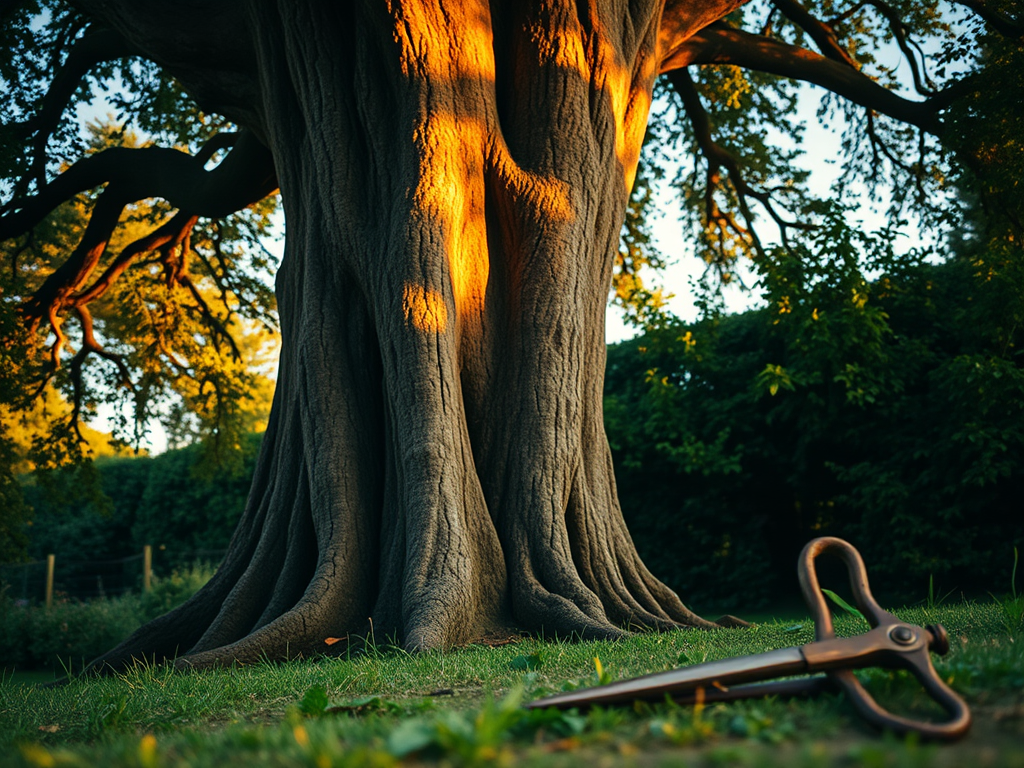
The only thing Mr Tyler was going to miss after he retired on Friday, was the thousand-year-old yew tree. And maybe his best pair of shears that he’d been given the first year he came to the gardens; he’d planned to bequeath them to the new Head Gardener during the handover on Thursday. But other than that he couldn’t wait to move on. There was nothing holding him here anymore. The old acceptance had gone out of him. He was fired up again. Time for something new, even at his grand old age.
The tree was a young adult in yew terms. Past puberty and all the early stages of hard-won painful growth and now budding up and out, coming into its own as an independent entity. The shears were handmade, timeless with a cutting action that was a dream, and handles that kept blisters to a minimum. Not that his calloused old thumbs could feel the pain anymore, even though he was constantly in agony, he somehow had managed to shrug it off, as did his tired old aching limbs that had turned berry brown from years in the sun, wind, rain. He felt pain now as an old friend or arch enemy; a dull ache that he’d miss if they didn’t keep up with the combat. In this deadening of nerves and sinews he hacked back dense undergrowth, planted bulbs, dug up weeds in all weathers for the final time.
The colleagues – would he miss any of them? They came and went most not taking root – a fresh intake of grads each year, whippersnappers who wanted to learn from him then move on, get it on their CV. The ones who stayed, eventually went off to have families or moved abroad. It wasn’t for everyone – this hard physical life day in day out. The garden was a 300-acre walled plot on the outskirts of a big city. Workers who didn’t last long there wanted the adventure of rain forest or the buzz of earnest research labs that could save the world from heating up or starvation. The ones that remained willingly were city dwellers who craved welly boots all year round and had a second home in the countryside.
But that yew tree, you could depend on her being there through thick and thin. She’d been there for him, that yew, his consistent companion for 35 years, no matter what world events were wreaking havoc outside, or whatever personal crises he was going through. The epic diameter of her, her rough trunk and dark green leaves had stood firm for him, his true north. When his wife died, that yew had held him up with her silent beacon of strength and solidarity. He knew if he could just be close to her bulk until the storms within him passed that the grieving would settle down to a low growl. And so it did.
The yew, she absorbed his grief for him, drew it deep within her trunk turned it into another ring in her timeline, drew in his despair along with carbon dioxide, tempests and heartbreak – breathed it back out as oxygen. The snails would continue to kill his prize dahlia tubers, blight would kill his tomatoes some years, his apples and pears would rot on the branch and slugs would mow down his seedlings before they’d even got started, but the yew – she stood solid, immoveable, forever present.
You could go out to the yew have a good moan, vent your disappointment at yet another year without a pay rise; you could skip over to her excitedly tell her how your granddaughter had passed her degree with honours; you could spend time sitting in silence with her, cuppa in hand; you could sit at her feet tell her how magnificent she was, how astonishing the Earth, she’d nod and accept it all with grace and humility, a gentle strength you couldn’t argue with.
He could never take her for granted and so when the time had come for him to consider retirement, and all that he could achieve once free from the garden, he’d sat underneath her boughs and discussed it with her, tried to get them both ready for the separation. She remained silent, gave him time to bask in the glow of knowing he’d saved her from jeopardy too over the years – from being uprooted and moved to a better position for the vista of the garden so they could get more visitors in, and how there were times when it appeared as if she was going to go first, her leaves wilting and looking like she was giving up. Oh how, then, he’d sat with her and talked her into staying. She obliged. He knew she would not do the same for him, she would not try to convince him to stay. When he finally asked her, what do you think? she had nodded and swayed a yes, yes, yes to his leaving. Go she had breezed, go, Jim, I’ll be fine. I’ll draw upon hundreds of years of separations, ready for the rebirth that comes with each of them.
At lunchtime on Friday, his last day as Head Gardener, the team gathered round him in the potting shed, made beautiful speeches that made his pragmatic eyes water in spite of himself, and they gave him wonderful gifts and hugs that he resisted in his usual no fuss way. No tears, come on now, I expected more of you all, he admonished as they wiped their eyes and smiled. Good old Mr Tyler how we’ll miss you and your dry sense humour. Then they went back to work, and he finished the day as usual with a tour around the garden checking everything was in order, as it should be.
He hesitated when he came to the path towards the yew, retreated, turned his back and walked the other way, avoiding her. He figured she didn’t need his goodbyes, was already wrapping the garden up in her capable arms, that she’d keep safe all the secrets he’d told her – of how he’d dreamt of being a footballer in his youth, had made it through the trials but an injury robbed it all from him, how he hadn’t really wanted to end up here in the garden at all.
He took off his security pass, and name tag and left them on the counter. Went home.
The yew shivered, felt the loss create another layer of bark. She took Jim’s aching hip and subtle limp, his dead, unfulfilled dreams deep down into the soil where they pulsed into her roots, and through osmosis she eventually aspirated them out from her leaves over a century later and sent them up into the bright blue sky.
Joolz Sparkes is a north London based writer; her short stories appear in Great Weather for MEDIA and other anthologies. Her poetry collection, London Undercurrents, a joint project with poet Hilaire, is published by Holland Park Press and uncovers London’s unsung heroines north and south of the river. Her pamphlet Face the Strain is a poetic manifesto for today’s troubled times and is published by Against the Grain poetry press.