You left home at eighteen, knew you could always come back. This time when you arrive there’s a skip outside.
Your mother opens the door, mouth smiling, eyes shadowed. She says she’s started filling suitcases. You both pick at the meal she’s made.
In the morning you find her kneeling on the sooty hearth rug. From an old wicker picnic hamper by her side, she’s feeding folded sheets of paper to flames. You know it’s their love letters because you’ve secretly read them.
“I know you think I’ve done nothing, but I’ve been getting rid of things that I won’t need anymore,” she says.
She puts out a hand to steady herself.
You could step forward. Help her up, take her to the kitchen, make coffee and ask her how she feels — you’ve not asked how she feels.
She tells you to take some packing boxes and get started upstairs.
On the bed she has laid out her hats — some already boxed, others wrapped in faded crepe paper. These she will take, instead of those letters collected together and cherished by your father. You can’t understand this, nor later will you understand her invitation to your cousins to pick through the skip for belongings she’s shed like old skin.
Neighbours arrive to help wrap and pack glasses and ornaments. The floor is covered in bubble wrap and the craic is good, like at a wake.
******
After the removal men shut their van doors and drive away, the house questions you in echoes.
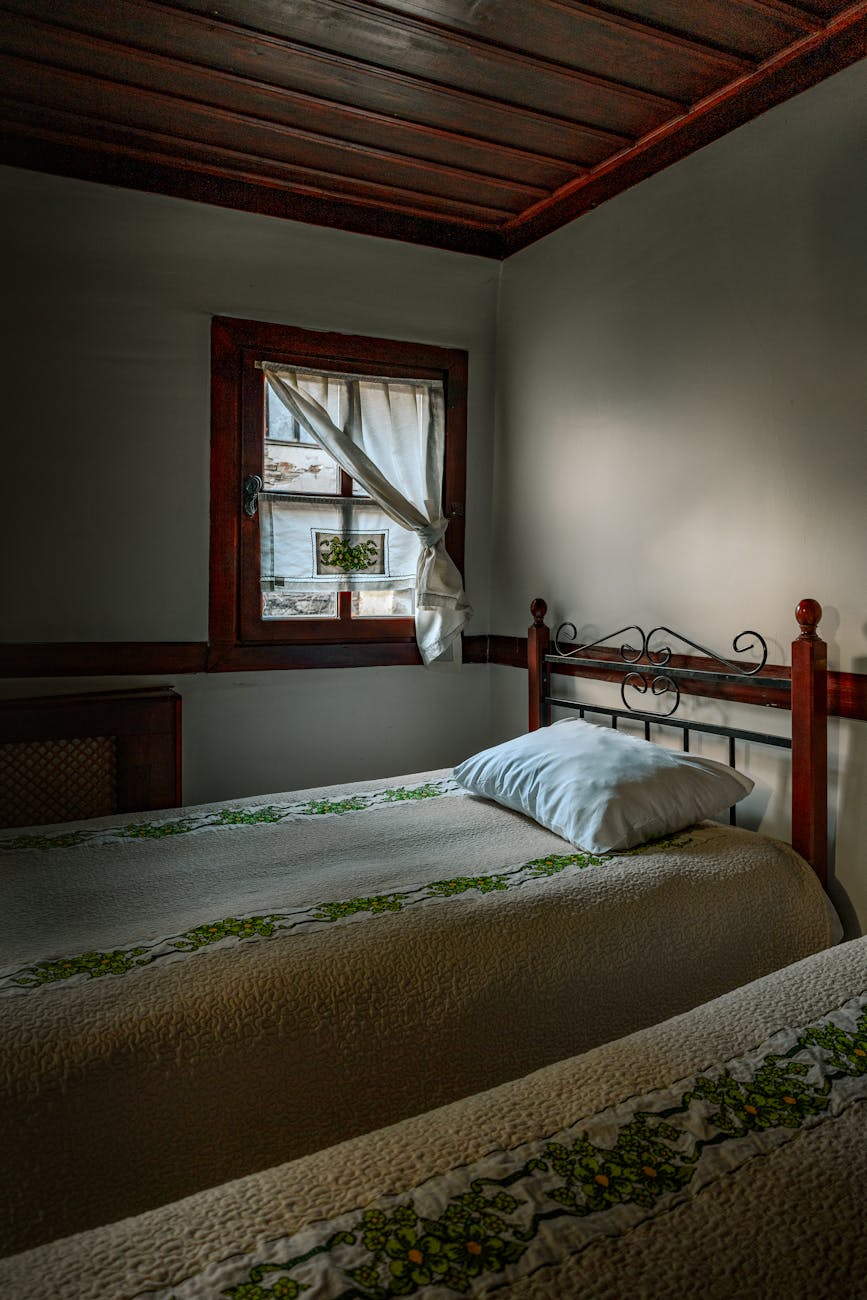
You wander to your bedroom, where little has changed. Your fingers follow patterns on the Formica-surfaced furniture, an old habit. Once they were whirlpools spiralling to the centre of the earth, or whirlwinds sucking you in and throwing you out. Back then with three clicks of your heels, all would be well. But today, they are just swirling patterns and all of this is destined for the skip.
At lunchtime tomorrow you will catch the ferry. She will move in with your family until her bungalow is ready. You have a room ready for her.
You can never think of anywhere else as home, even though you thought you’d left at eighteen.
You rest your forehead on the windowpane, look out to the garden where the beauty of everything screams his absence. Your eyes follow his crazy tile paving which winds between flowerbeds, still blooming with plants he grew from seed, and low hedges from stolen cuttings.
In the cool of the evening when your mother’s not watching, you slip out, brush past the lavender and the last of the sweet pea. Times spent here with him cascade through the scented air. A childhood’s infinity. Learning to love and understand the strength and frailty in living things.
You pull yourself up amongst the branches to the bough where you would sit to read. You throw your arms around your old friend, the willow tree. Rub your face against its trunk until you smell nothing but its greening bark. Then you run your fingertips across the lenticels, which look and feel so much like scars.
You’re afraid that to dwell on the depth of this moment could peel you open layer by layer — and for her, you must not give way.
Not when you close up hollow rooms and rest your head on the weathered wood of the front door. Not when you watch her kiss and hug her neighbours of over thirty years. Not when you put her two suitcases in your boot.
It is when you take the car up the drive, past the fuchsia, the purple-leafed maple, and the cherry tree. The humble, generous cherry tree which has spread its pink petal carpet before you, spring after hopeful spring. It is when you pass by these constants and through the gates you helped him paint — only then your eyes are blinded, and she touches your knee and says her heart is breaking too.
Sue Pearson is an author renowned for her well-crafted prose. The short story ‘Willow Tree’ was first published in the 2021 Fragmented Voices fiction anthology ‘Hearth’.